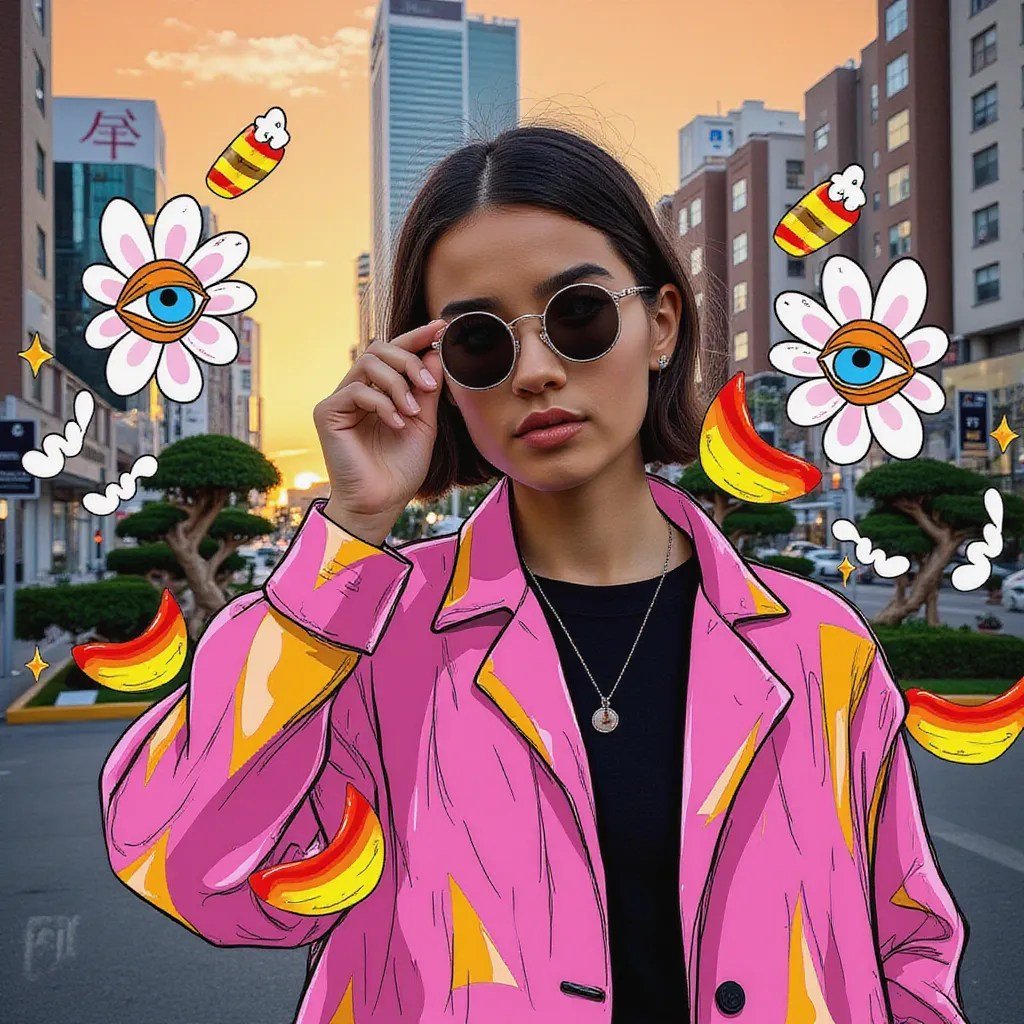
Imagine you’re crafting digital art with the flick of a textual prompt. You’ve mastered the basics, but what if you want your AI-generated character to consistently wear a specific outfit, or for every landscape to have a unique, painterly aesthetic? Standard prompts often fall short, leaving your creative vision to chance. This is precisely where Understanding Jellymon AI & LORA Models comes into play, offering a powerful toolkit to fine-tune your generative AI journey and achieve unparalleled precision.
This guide will demystify LoRA (Low-Rank Adaptation) models, reveal their incredible potential, and walk you through the practical steps to integrate them into your workflow. Get ready to transform your AI artistry from generic to genuinely iconic.
At a Glance: Your LoRA Quick Start Cheat Sheet
- What it is: LoRA (Low-Rank Adaptation) is a small, specialized model that adds stylistic or conceptual tweaks to a larger base AI model (like Stable Diffusion).
- Size Matters: LoRAs are tiny – think 2-500 MBs – making them easy to download and store in vast quantities. They're up to 100 times smaller than full checkpoint models.
- Team Player: A LoRA can’t generate images on its own. It always needs a larger base model (e.g., Stable Diffusion v1.5 or SDXL) to function.
- Precision Tool: They excel at introducing specific characters, styles, objects, or poses with consistency that regular text prompts struggle to achieve.
- Efficiency King: LoRAs offer an excellent balance between small file size and powerful training effectiveness, making them a go-to for many AI artists.
- SDXL Ready: StabilityAI even highlights LoRAs as the prime method for enhancing images generated by their robust SDXL v1.0 base model.
The Big Picture: What Are LoRA Models and Why Do They Matter?
In the burgeoning world of AI image generation, "checkpoint models" are the heavy lifting heroes. They're vast, foundational models like Stable Diffusion that can generate almost anything based on your text prompts. But what if you need something more specific? Something that consistently nails a particular character's look, an artist's signature style, or a recurring object? That's where LoRA models step in, acting like precision instruments to refine your AI's creative output.
LoRA, short for Low-Rank Adaptation, refers to small Stable Diffusion models engineered to introduce subtle yet impactful stylistic or conceptual adjustments to these conventional checkpoint models. Think of a LoRA as a specialized "mod" or an "expansion pack" for your base AI. Instead of retraining the entire colossal model (which is time-consuming and resource-intensive), a LoRA just teaches it a few new, very specific tricks. This allows you to fine-tune Stable Diffusion for niche concepts, whether it's the exact appearance of a beloved cartoon character or the unique brushstrokes of a famous painter, improving consistency that regular prompt engineering might easily miss.
Key Characteristics That Make LoRAs Indispensable
LoRAs aren't just cool; they're incredibly practical, built on principles that empower users with flexibility and control:
- Remarkably Small Size: This is arguably their greatest advantage. While a full checkpoint model might clock in at several gigabytes, LoRA models typically range from a mere 2 MBs up to about 500 MBs. That's up to 100 times smaller! This tiny footprint means you can build and maintain a vast personal library of LoRAs without hogging immense storage space, allowing for endless creative permutations.
- Co-Dependent Functionality: It's crucial to remember that LoRAs are not standalone generators. They are enhancers. You cannot use a LoRA by itself; it must always be used in conjunction with a base model checkpoint file. Think of it like an add-on lens for a camera – the lens modifies the image, but you still need the camera body to take the photo.
- Unmatched Efficiency: LoRAs strike a near-perfect balance between their compact file size and their effectiveness in training. They can be trained relatively quickly on smaller datasets, yet yield significant, noticeable changes in generated images. This efficiency makes them ideal for rapid iteration and community-driven development.
- Optimized for SDXL Integration: The future of AI image generation is constantly evolving, and LoRAs are right at the forefront. StabilityAI, the creator of Stable Diffusion, actively expects LoRAs to be the most popular and efficient method for enhancing images generated with their cutting-edge SDXL v1.0 base model. This endorsement underscores their importance as a long-term solution for specialized AI art. For more on how these models connect with broader AI tools, explore the Jellymon AI LORA hub.
Diving Deeper: Types of LoRA Models for Every Creative Vision
The versatility of LoRA models is truly impressive, allowing artists and enthusiasts to zero in on incredibly specific aspects of image generation. Each type of LoRA is trained with a distinct purpose, offering a targeted solution for common creative challenges.
Character LoRA: Bringing Personas to Life
These models are trained on specific characters, whether they're from beloved cartoons, iconic video games, or even your original creations. The goal of a Character LoRA is to accurately recreate their appearance, features, and even their typical demeanor with remarkable consistency. Achieving an effective Character LoRA usually requires training with 10-20 diverse images of the character, capturing them from various angles and in different contexts.
- Example: A LoRA trained on "Spiderman" could ensure consistent web-slinger suits and poses, regardless of the prompt's background or action.
Style LoRA: Painting with AI's Brushstrokes
Style LoRAs are all about aesthetics. They focus on artistic styles, which could be the unique flair of a specific artist (like Van Gogh or Monet), the animation style of a particular show, or even general artistic techniques such as watercolor, lineart, or cyberpunk aesthetics. Applying a Style LoRA allows you to imbue your AI artwork with a unique visual language, transforming ordinary scenes into masterpieces reflecting your chosen style.
- Example: Imagine applying a "Ghibli Studio" style LoRA to a prompt about a forest, instantly giving it that dreamy, hand-drawn animation feel.
Concept LoRA: Exploring Abstract Ideas
Sometimes, your creative vision revolves around an idea rather than a tangible thing. Concept LoRAs are trained on specific concepts or abstract ideas, such as emotions (e.g., "melancholy," "exuberance"), actions (e.g., "mid-jump," "deep contemplation"), or even specific, unique objects (like "a glass sculpture of a phoenix"). These LoRAs help convey unique artistic themes and imbue your images with a particular mood or narrative element.
- Example: A "Steampunk Goggles" Concept LoRA could consistently generate intricate, brass-laden eyewear on any character you prompt.
Pose LoRA: Directing Dynamic Scenes
While ControlNet offers granular control over posing, Pose LoRAs provide a simpler, more direct way to modify character poses. They are trained on specific actions or body configurations, enabling you to create dynamic scenes without needing advanced tools. Whether you want a character running, jumping, sitting gracefully, or striking a heroic stance, a Pose LoRA can guide the AI to achieve that body language.
- Example: A "Yoga Warrior Pose" LoRA could ensure a figure in your image consistently adopts that specific, balanced stance.
Clothing LoRA: Dressing Your Digital Darlings
Details matter, and for characters, clothing and accessories are key. Clothing LoRAs are designed to change character attire, enhancing the authenticity and detail of specific outfits. From a medieval knight's full plate armor to a futuristic cyberpunk jacket, these LoRAs can ensure your characters are dressed exactly as you envision.
- Example: A "Victorian Dress" LoRA would help generate intricate, period-appropriate gowns for characters in historical settings.
Object LoRA: Populating Your Worlds
Finally, Object LoRAs are for generating specific items that populate your scenes. This could range from common furniture pieces and lush plants to detailed vehicles or even abstract user interface elements. These LoRAs ensure that objects appear accurately and consistently within your generated images, adding realism and specificity to your digital worlds.
- Example: A "Retro Arcade Cabinet" LoRA could place a faithfully rendered vintage gaming machine in a room, complete with pixel art and joysticks.
Each of these LoRA types serves as a powerful brush in your digital art toolkit, allowing for a level of control and specificity that was once unimaginable. To further enhance your understanding and discover a plethora of specialized tools, consider browsing the resources at the Jellymon AI LORA hub.
Finding Your Perfect Palette: Where to Source LoRA Models
With such incredible versatility, the next natural question is: where do you find these powerful little models? Fortunately, the open-source AI community is incredibly vibrant and generous. LoRA models are freely available, ready for you to download and integrate into your creative workflow.
The two primary hubs for sourcing LoRA models are:
- Civitai.com: This is arguably the most popular and comprehensive repository for all things Stable Diffusion, including a massive collection of LoRA models. Civitai features a user-friendly interface, robust search filters, and an active community. Each LoRA page typically includes example images, user reviews, trigger words, recommended settings, and crucial information about the base models it was trained on or is compatible with.
- Huggingface: A broader platform for machine learning models and datasets, Huggingface also hosts a significant number of LoRA models. While perhaps less image-focused than Civitai, it remains a reliable source for high-quality LoRAs, especially those released by researchers or more technically inclined creators.
A Quick Tip on Sourcing: When downloading from either site, always take a moment to review the LoRA's description and accompanying images. Look for: - Trigger Words: These are often specific words or phrases you must include in your prompt for the LoRA to activate effectively.
- Recommended Base Model: Some LoRAs perform best with a particular checkpoint model (e.g., SD v1.5, SDXL, or a specific "Anime" base).
- Recommended Weight: Creators often suggest an optimal weight (e.g., 0.6, 1.0) for their LoRA.
- User Feedback: Comments and reviews can offer valuable insights into a LoRA's strengths, weaknesses, and common usage tips.
Vetting these details will save you time and frustration, ensuring a smoother creative process as you build your collection of specialized tools.
Your Creative Control Panel: Using LoRA Models in AUTOMATIC1111
Now for the hands-on part. If you’re using AUTOMATIC1111’s Stable Diffusion web UI, integrating LoRA models is surprisingly straightforward. This step-by-step guide will walk you through setting up your environment and generating your first LoRA-enhanced images.
Preparation: Setting Up Your Environment
Before you can start generating, you need to ensure your AUTOMATIC1111 setup is ready to recognize and utilize LoRAs.
- Install the LoRA Extension (if not already installed):
The web UI needs an extension to properly manage LoRA models.
- Launch your AUTOMATIC1111 web UI in your browser.
- Navigate to the "Extensions" tab at the top.
- Select the "Install from URL" sub-tab.
- In the "URL for extension's git repository" input field, paste the following link:
https://github.com/kohya-ss/sd-webui-additional-networks.git - Click the "Install" button.
- Once installed, switch to the "Installed" sub-tab.
- Click "Apply and restart UI" to activate the new extension. Your UI will reload.
- Configure the LoRA Folder Path:
After the UI restarts, you need to tell it where your LoRA files will live.
- Open the "Settings" tab, then navigate to "Additional Networks" in the left-hand menu.
- Locate the "Extra paths to scan for LoRA models" input field.
- Enter the full path to your designated LoRA directory. By default, this is typically
stable-diffusion-webui/models/Lora. If you use a different path, make sure it's accurate. - Click "Apply settings" at the top of the section. You might need to reload the UI again for this to take full effect.
Gathering Your Assets
Your environment is ready; now it's time to stock up on LoRAs.
3. Download and Place LoRA Files:
- Visit open-source repositories like Civitai.com or Huggingface (as discussed earlier).
- Download your desired LoRA model files. These typically have
.safetensorsor.ckptextensions. - Carefully place these downloaded files into the
stable-diffusion-webui/models/Lorafolder (or whatever custom path you configured in step 2).
Bringing It All Together: Generating Images with LoRA
With your LoRAs in place, you’re ready to create!
- Launch UI & Select Checkpoint:
- Ensure your AUTOMATIC1111 web UI is running.
- From the top-left dropdown menu, select your desired checkpoint model. Remember to check if your chosen LoRA has a specific base model recommendation on its download page.
- Craft Your Prompts (Including Trigger Words):
- Enter your creative positive prompt and any necessary negative prompts in their respective fields.
- Crucially: If the LoRA you're using has a specific "trigger word" (often found on its Civitai page or description), make sure to include it in your positive prompt. Without the trigger word, the LoRA might not activate properly.
- Activate Your LoRA:
- Look for the "Show/hide extra networks" icon (it usually looks like a grid or multiple squares, often located just below the "Generate" button, or sometimes labeled "Additional Networks"). Click it.
- A new panel will appear, likely showing "Textual Inversion," "Hypernetworks," and "LoRA" as sub-tabs. Click on the "LoRA" sub-tab.
- You'll see cards for all the LoRA models you’ve placed in your
models/Lorafolder. - Click directly on the LoRA card you want to use. This action will automatically append a tag like
<lora:model_name:1>to your positive prompt.
- Adjust Weighting:
- The
:<weight>part of the LoRA tag (e.g.,:1) controls its influence. A weight of1means full strength. - You can adjust this number after the colon (e.g., change
1to0.6for less influence, or1.2for more, though going too high can sometimes distort images). - Many LoRA creators provide recommended weights on their download pages; start there and experiment. A good range to explore is often between
0.4and1.0.
- Configure Other Settings & Generate:
- Set any other generation parameters you desire (e.g., sampling steps, CFG scale, seed, dimensions).
- Click "Generate".
Congratulations! You've just used a LoRA model to guide your AI's creativity. This process opens up a world of specific styles and consistent characters, moving your AI art to the next level. For more detailed guides and a rich collection of models, be sure to visit the Jellymon AI LORA hub where creators share their latest innovations.
Beyond the Basics: Tips for Mastering LoRA Integration
Simply using a LoRA is one thing; mastering its integration to achieve your exact vision is another. Here are some advanced tips and considerations to refine your LoRA workflow.
Combining Multiple LoRAs: A Symphony of Styles
One of the most exciting aspects of LoRAs is their ability to be combined. You can, for instance, apply a "Character LoRA" with a "Style LoRA" to create a specific character rendered in a particular artistic aesthetic.
- How to do it: Simply click on multiple LoRA cards in the "Additional Networks" panel. Each will append its tag to your prompt:
<lora:character_name:1> <lora:style_name:0.7>. - Caution: While powerful, combining too many LoRAs, or LoRAs with conflicting instructions, can lead to chaotic or distorted results. Start with two, fine-tune their weights, and then cautiously add more if needed. It's like mixing spices – too many can spoil the dish.
Understanding Trigger Words: Your Secret Handshake with the LoRA
Many LoRAs are trained with specific "trigger words" or phrases that act as a signal to the model. These are not always obvious.
- Always Check: Before using a LoRA, always check its description on Civitai or Huggingface for any required trigger words.
- Placement Matters: Place trigger words naturally within your positive prompt. They're often most effective early in the prompt.
- Experiment: If a LoRA isn't behaving as expected, try slightly varying the trigger word or its placement.
Iterative Testing with Weights: The Art of Influence
The weight applied to a LoRA (<lora:model_name:0.7>) is your primary control over its intensity.
- Start with Recommendations: Begin with the weight suggested by the LoRA creator.
- Increment and Decrement: If the effect is too strong, reduce the weight (e.g., 0.8, 0.6, 0.4). If it's too subtle, increase it (e.g., 1.1, 1.2, 1.3 – but be cautious beyond 1.5, as it can cause artifacts).
- A/B Testing: Generate images at different weights, keeping all other prompt and setting parameters constant, to visually compare the impact. This helps you find the "sweet spot."
Common Pitfalls to Avoid
Even seasoned artists occasionally stumble. Here are some common issues and how to troubleshoot them:
- Wrong Base Model: Some LoRAs are trained on specific Stable Diffusion versions (e.g., SD 1.5) or specialized checkpoints (e.g., anime-focused models). Using them with an incompatible base model (like SDXL without explicit compatibility) can lead to poor results or errors. Always check the LoRA's requirements.
- Incorrect Folder Path: Double-check that your LoRA files are placed in the exact directory configured in AUTOMATIC1111's settings. A single typo can prevent detection.
- Missing Trigger Word: As mentioned, neglecting to include the trigger word is a common reason a LoRA might seem ineffective.
- Over/Under-Weighting: A weight that's too high can lead to over-saturation, deformation, or repetitive elements. A weight that's too low might make the LoRA's effect imperceptible. Experiment!
- Outdated Extension: Ensure your "Additional Networks" extension is up to date. Occasionally, bugs or compatibility issues arise with older versions.
By being mindful of these considerations, you’ll not only use LoRAs more effectively but also unlock a deeper understanding of how they shape your AI-generated art. Continue your journey of discovery by exploring the latest models and community insights available at the Jellymon AI LORA hub.
Frequently Asked Questions About LoRA Models
As you delve deeper into AI image generation with LoRAs, a few common questions often arise. Here are crisp, clear answers to help you navigate your creative path.
Can I use LoRA models without a base model?
No, absolutely not. LoRA models are designed as add-ons or modifiers for larger, foundational checkpoint models (like Stable Diffusion). They fine-tune specific aspects, but they lack the core generative capabilities to produce an image from scratch. You must always select a base checkpoint model in AUTOMATIC1111 for any LoRA to function.
What's the ideal LoRA weight?
There isn't a single "ideal" weight; it varies significantly depending on the specific LoRA, the base model, and your desired outcome.
- Starting Point: Many creators recommend a starting weight between
0.6and0.8. - Experimentation is Key: The best approach is to test different weights (e.g.,
0.4,0.6,0.8,1.0,1.2) and visually compare the results. Sometimes a lower weight creates a subtle stylistic hint, while a higher weight introduces a stronger, more dominant effect. Going too high (e.g., above1.5or2.0) can often lead to distortions.
Are LoRAs only for Stable Diffusion?
While the context research and common usage heavily feature LoRAs with Stable Diffusion and its various iterations (like SDXL), the underlying "Low-Rank Adaptation" technique itself can be applied to other large language or diffusion models. However, in the context of AI image generation and platforms like AUTOMATIC1111, LoRAs are almost exclusively used to fine-tune Stable Diffusion base models.
How do LoRAs compare to full checkpoint models?
LoRAs and full checkpoint models serve very different but complementary purposes:
- Size: Checkpoints are massive (several GBs); LoRAs are tiny (MBs).
- Functionality: Checkpoints are standalone image generators; LoRAs are modifiers that require a checkpoint.
- Specificity: Checkpoints are generalists, capable of wide-ranging generations; LoRAs are specialists, designed for highly specific stylistic, character, or conceptual tweaks.
- Training: Training a full checkpoint is resource-intensive and time-consuming; training a LoRA is much faster and more accessible.
Think of it this way: a checkpoint is the entire operating system, while a LoRA is a specialized application that enhances a specific feature within that system.
Unlocking New Creative Horizons: Your Next Steps with LoRA
You've now got the map to navigating the exciting landscape of LoRA models. From understanding their core characteristics and diverse types to the practical steps of integrating them into AUTOMATIC1111, you're equipped to push the boundaries of your AI-generated art. The true power of LoRAs lies in their ability to inject unparalleled consistency and specificity into your creations, transforming abstract prompts into concrete, highly personalized visuals.
Don't just read about it; dive in and start experimenting! The AI art community thrives on exploration and sharing. Try combining different LoRAs, playing with their weights, and seeing how they interact with your favorite base models and prompts. Each generated image is a learning opportunity, bringing you closer to mastering this powerful tool. The journey of creation with AI is iterative, fascinating, and constantly evolving.
For continuous inspiration, new models, and a community of fellow creators eager to share their insights, make sure to regularly explore resources like the Jellymon AI LORA hub. Your next masterpiece, infused with the precision and flair of LoRA models, is just a few clicks away. Happy generating!